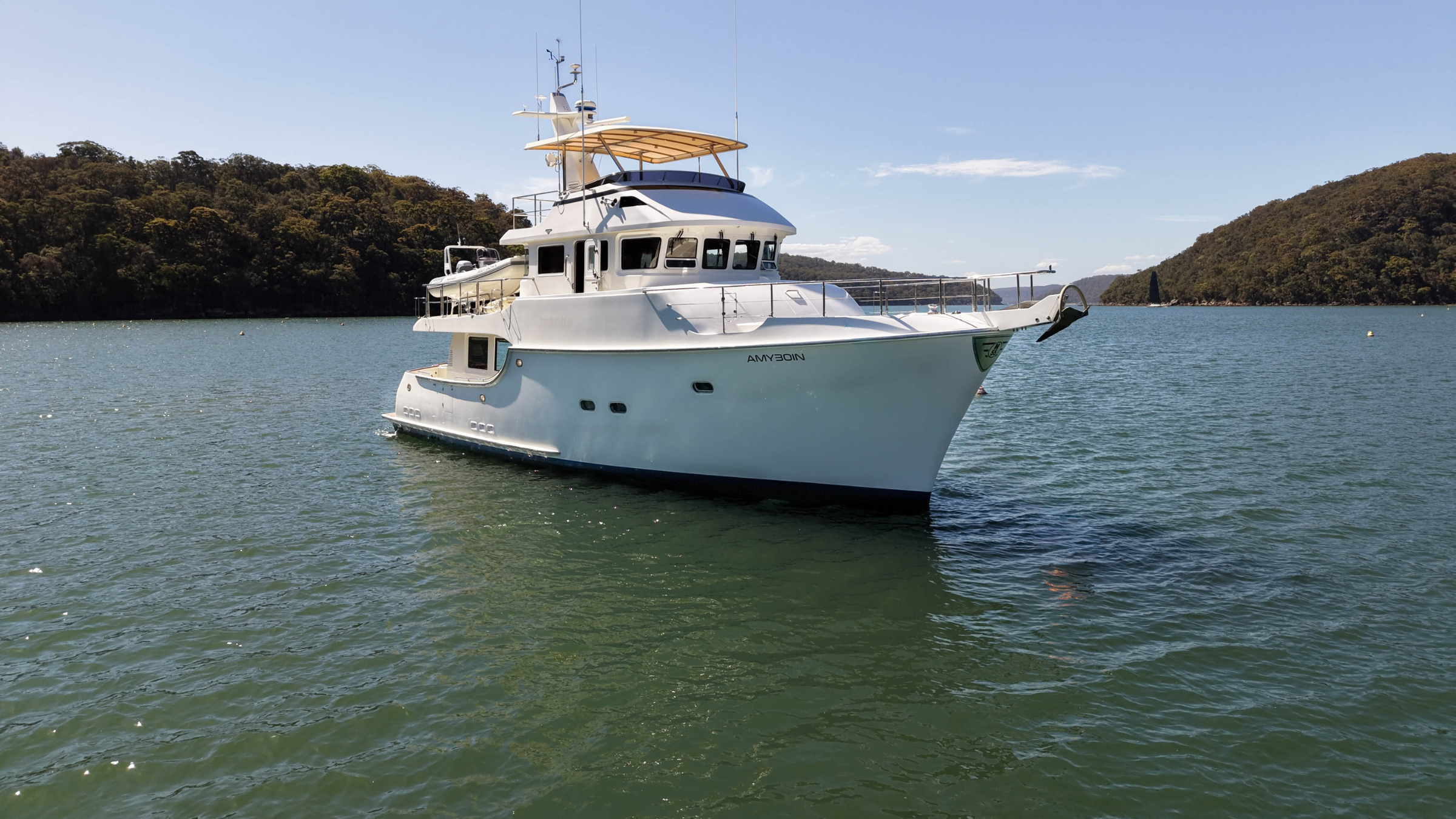
There’s something about a Nordhavn that gets boating enthusiasts talking.
When we recently shared our Nordhavn 55 Last Mango, the response was remarkable. In just 48 hours, the boat attracted more than 23,500 views across social media and another 9,000 on YouTube.
But what is it about these distinctive motor yachts that attracts so much interest?
The answer goes well beyond their appearance. Nordhavn has spent decades developing vessels specifically for long-distance cruising, earning a loyal following among owners who value range, reliability and the freedom to spend extended periods at sea.
Let’s take a closer look at what makes the Nordhavn 55 so special.
What Makes Nordhavn Yachts Different?
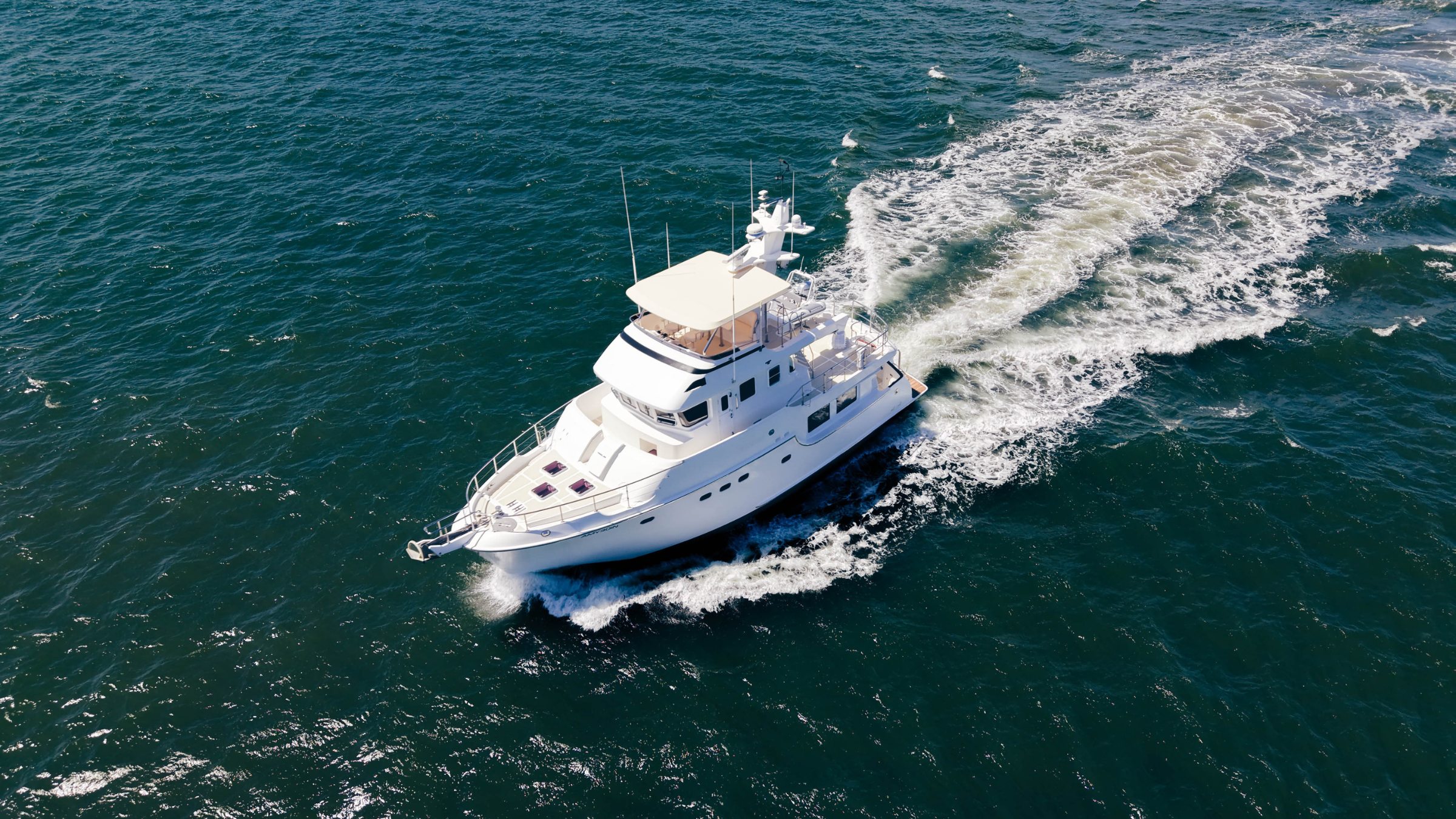
Most recreational motor yachts are designed to balance speed, comfort and entertaining. Nordhavn takes a different approach, placing long-range cruising capability at the centre of its designs.
One of the biggest differences is the hull.
The Nordhavn 55 uses a modified full-displacement hull, designed to move efficiently through the water at relatively low speeds rather than rising onto the plane.
Unlike a planing motor yacht, which requires considerable horsepower to reach higher speeds, a displacement yacht is designed to travel economically at speeds appropriate to its hull.
This is particularly important when cruising long distances, where fuel consumption, range and reliability become major considerations.
The Nordhavn 55 also features a high bow, substantial freeboard and a deep hull designed with offshore conditions in mind.
The result is a yacht built for covering distance rather than chasing speed.
How Far Can a Nordhavn 55 Travel?
Long-range capability is one of Nordhavn’s biggest selling points.
According to the manufacturer’s original design information, the Nordhavn 55 was engineered for an estimated range of approximately 3,000 nautical miles at 8.25 knots under specified conditions.
To put that into perspective, 3,000 nautical miles is approximately 5,556 kilometres.
However, actual range depends on several factors, including fuel capacity, vessel loading, engine condition, sea conditions and cruising speed.
Reducing speed can make a substantial difference to fuel consumption on a displacement yacht, which is why passage planning is such an important part of long-distance cruising.
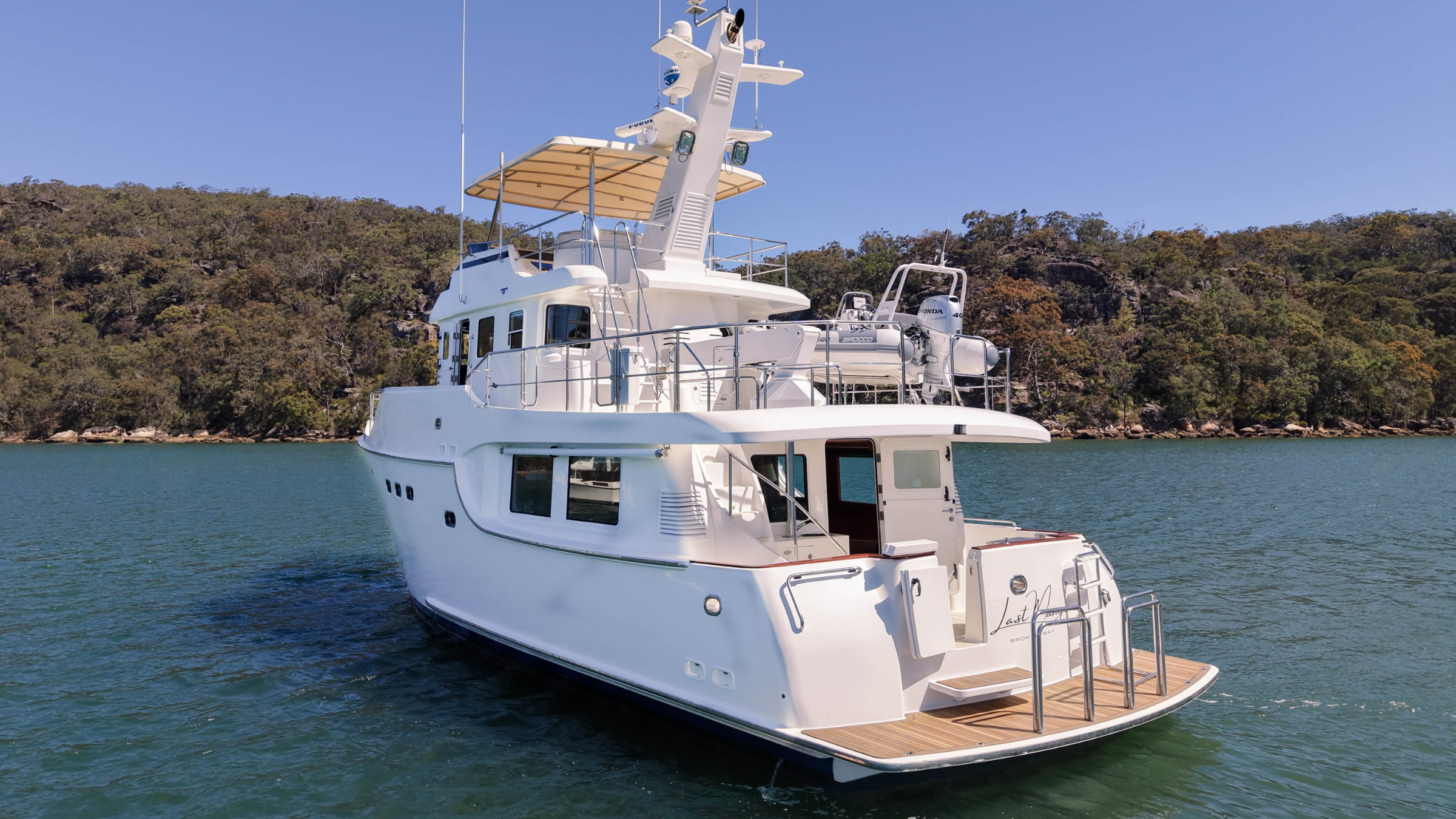
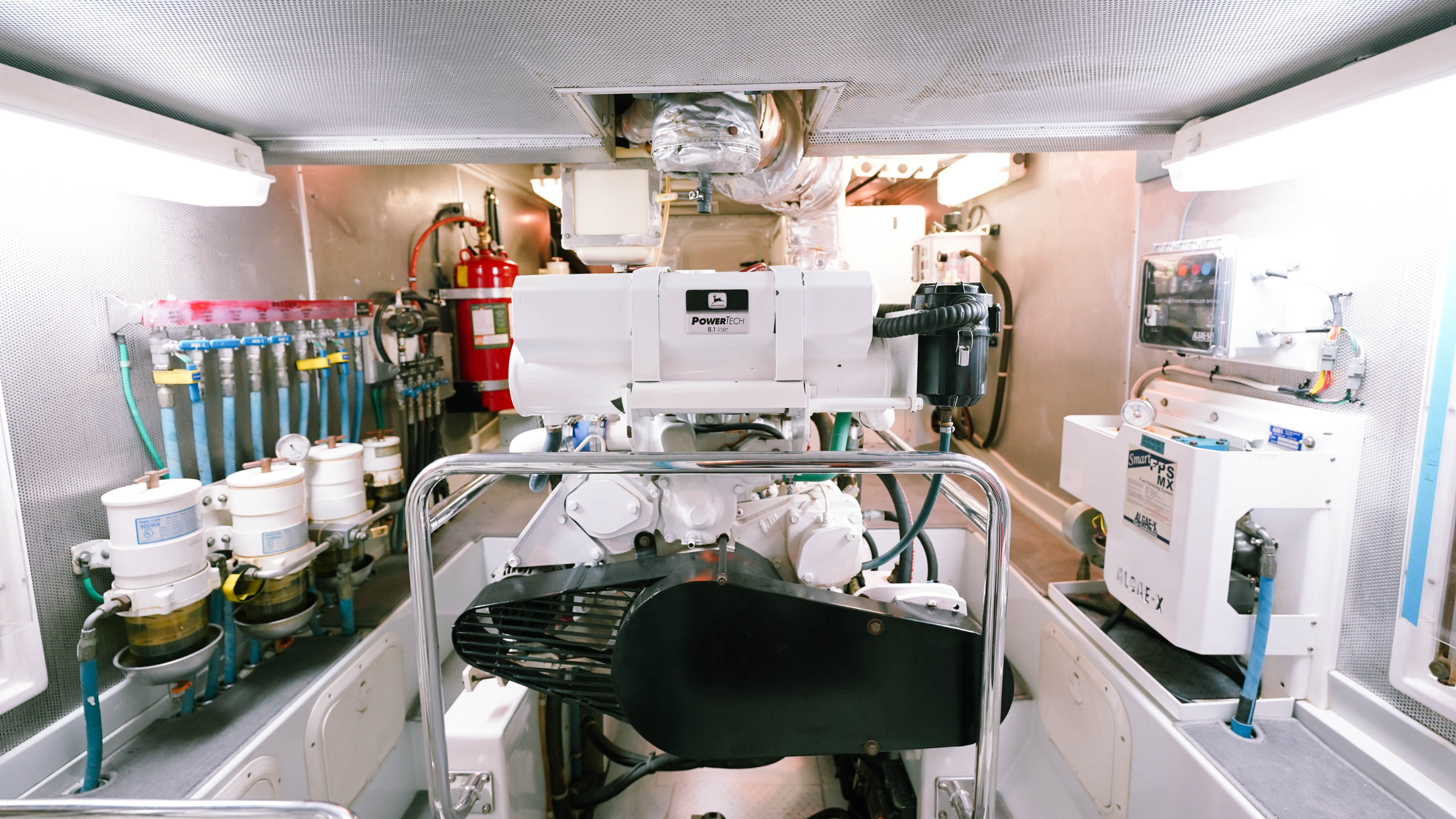
Our Nordhavn 55 Last Mango is powered by a 330hp John Deere diesel engine and carries 8,441 litres of fuel. Her actual cruising range should be assessed using her specific fuel consumption figures rather than relying on the manufacturer’s original design estimates.
For buyers considering extended cruising, understanding the relationship between speed, fuel consumption and usable range is essential.
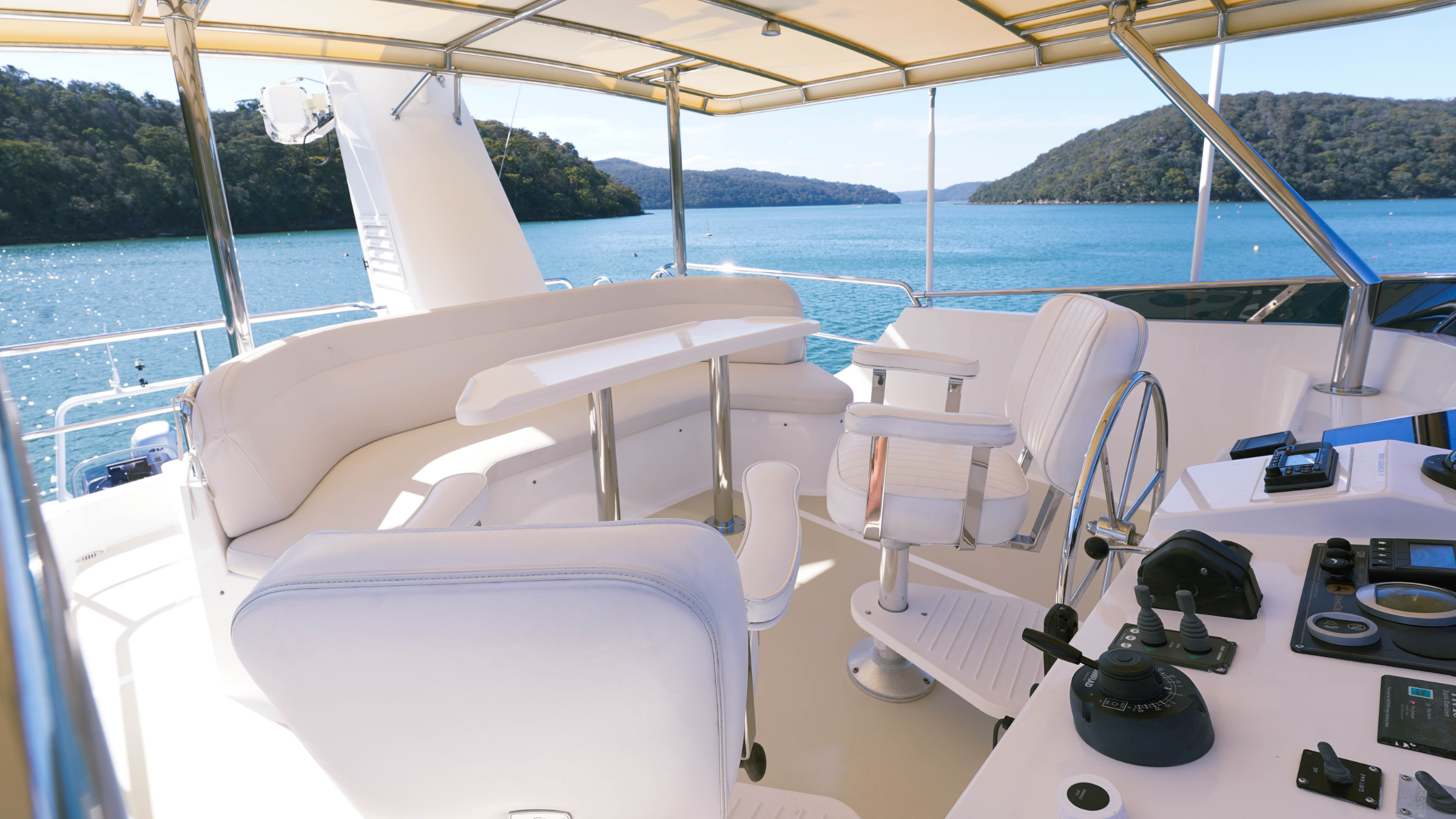
Why Does the Nordhavn 55 Have a Wing Engine?
One particularly interesting feature of Last Mango is her secondary 70hp Lugger wing engine.
On a single-engine long-range cruising yacht, a wing engine provides an independent means of propulsion should the main engine become unavailable.
Unlike a generator, which supplies electrical power, a wing engine is connected to a separate propulsion arrangement that can move the vessel at reduced speed.
This redundancy is especially valuable when travelling considerable distances from ports or marine assistance.
For owners planning extended offshore passages, equipment such as wing engines, backup navigation systems and reliable electrical systems deserves careful consideration.
It’s not simply about having more equipment aboard. It’s about understanding how the vessel can continue operating if an important system fails.
The Engineering Behind Comfortable Ocean Passages
Long-range cruising isn’t only about how far a boat can travel. It’s also about how comfortably the crew can make that journey.
The Nordhavn 55 was designed with several features that help address the challenges of extended passages.
Active Fin Stabilisers
Last Mango is fitted with ABT-TRAC 250 active fin stabilisers.
These hydraulic fins work to reduce the rolling motion of the vessel while underway, improving comfort for passengers and crew.
On a long passage, reducing roll can make everyday activities such as cooking, resting and moving around the boat considerably more comfortable.
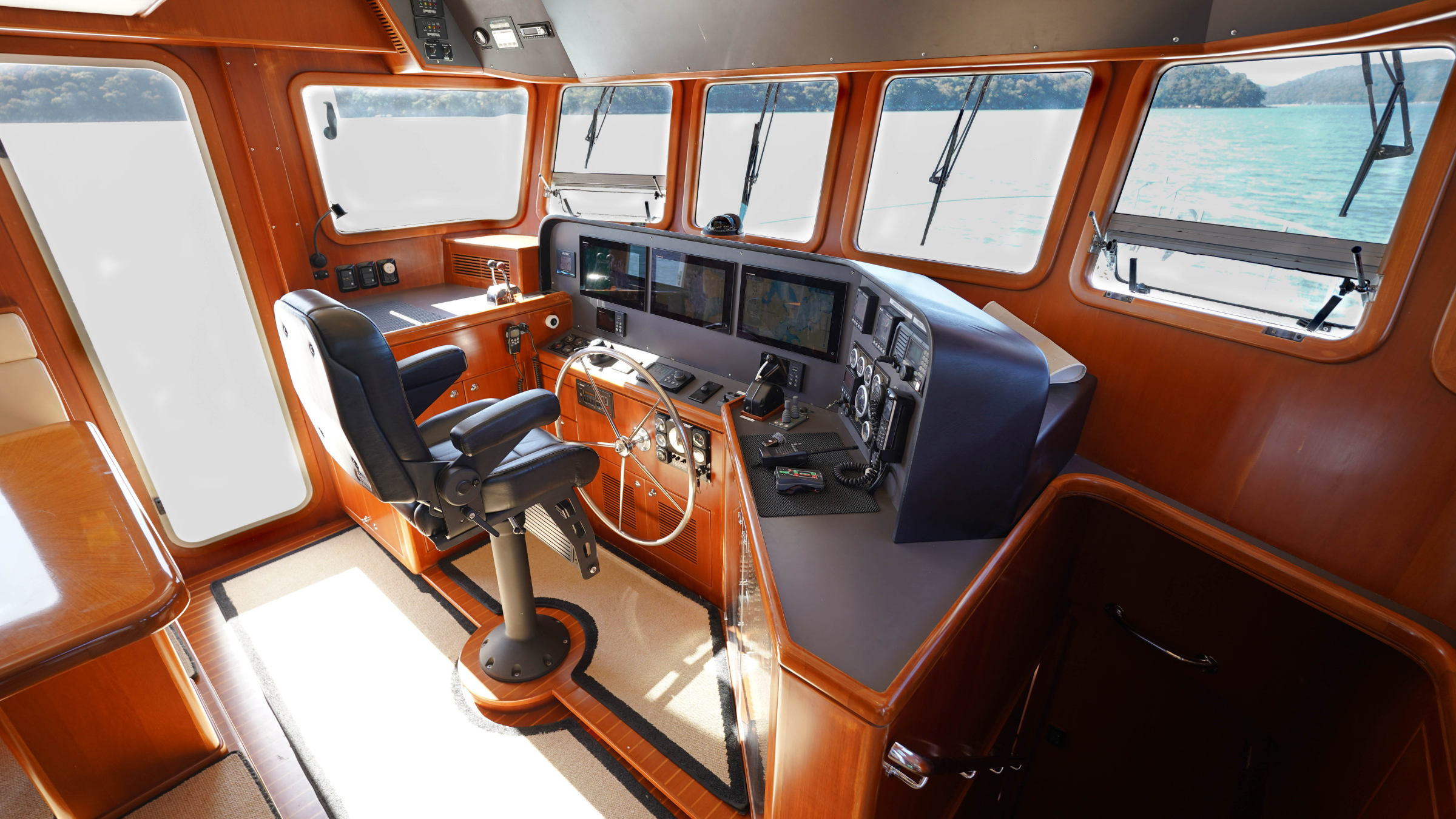
Raised Pilothouse
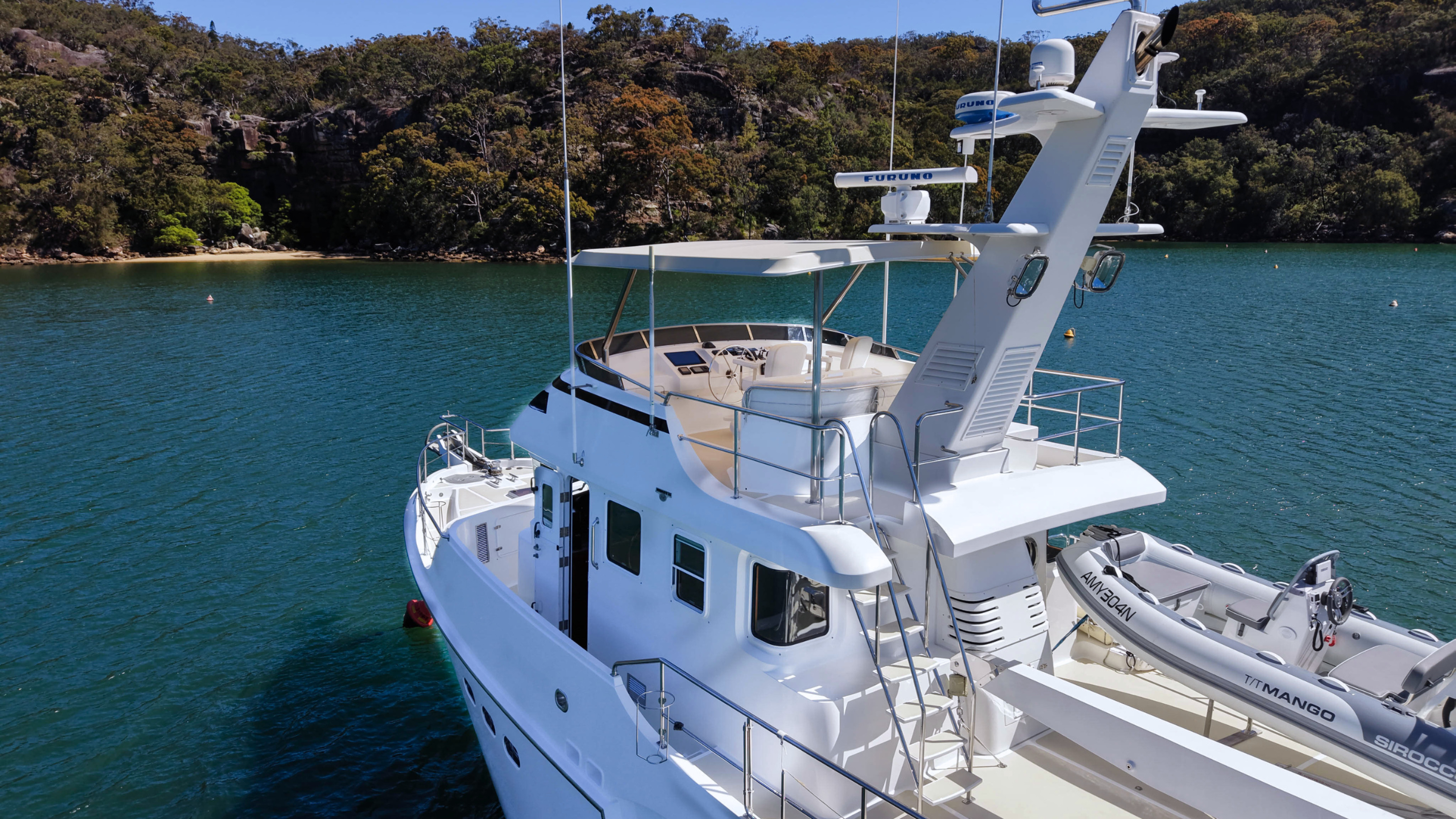
The Nordhavn 55’s raised pilothouse is another defining feature.
Located around the middle of the vessel, where pitching motion is generally less pronounced than at the bow, it provides a dedicated navigation area with excellent visibility.
The design also incorporates accommodation close to the pilothouse, allowing off-watch crew members to rest nearby during extended passages.
Thrusters and Manoeuvrability
While displacement yachts are designed for efficient travel at sea, manoeuvring a substantial vessel in a marina presents different challenges.
Last Mango features hydraulic bow and stern thrusters, along with a Dockmate wireless remote.
These systems provide additional control when approaching berths or manoeuvring in confined spaces, although their operation still requires careful judgement and an understanding of the vessel’s handling characteristics.
Can You Live Aboard a Nordhavn 55?
Absolutely. In fact, extended time aboard was a major consideration in the original design.
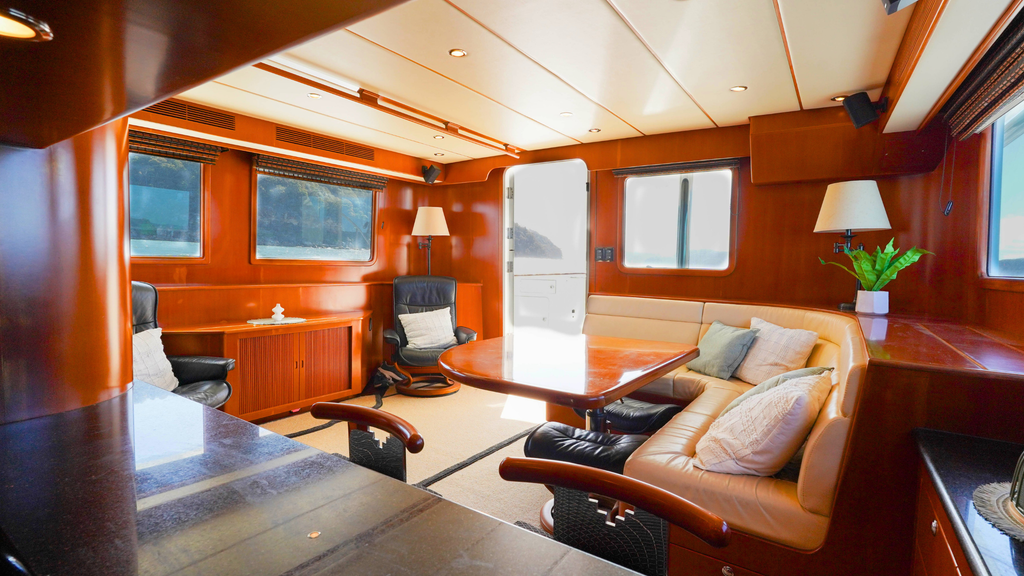
One of the most appealing aspects of the Nordhavn 55 is the amount of usable interior space.
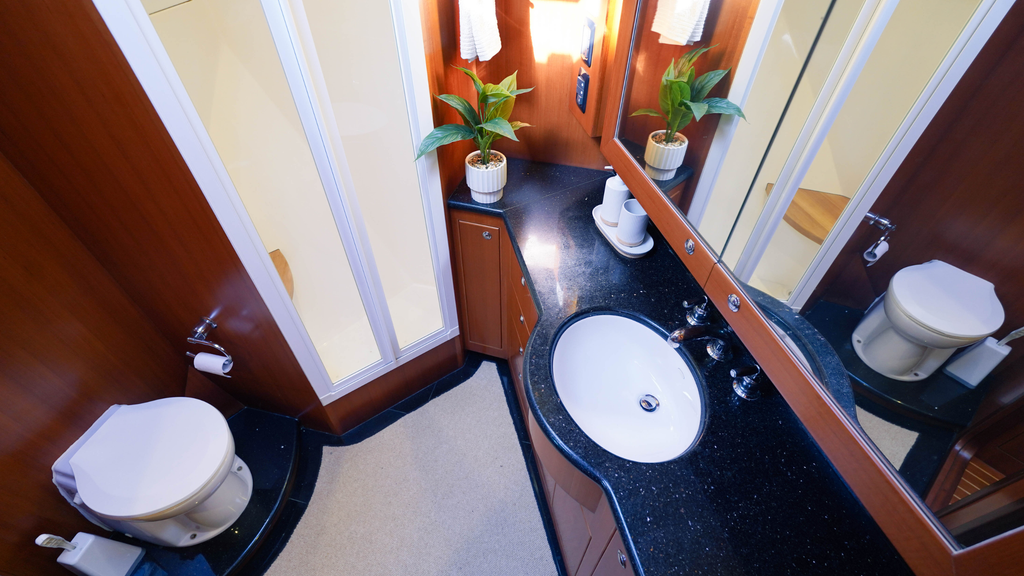
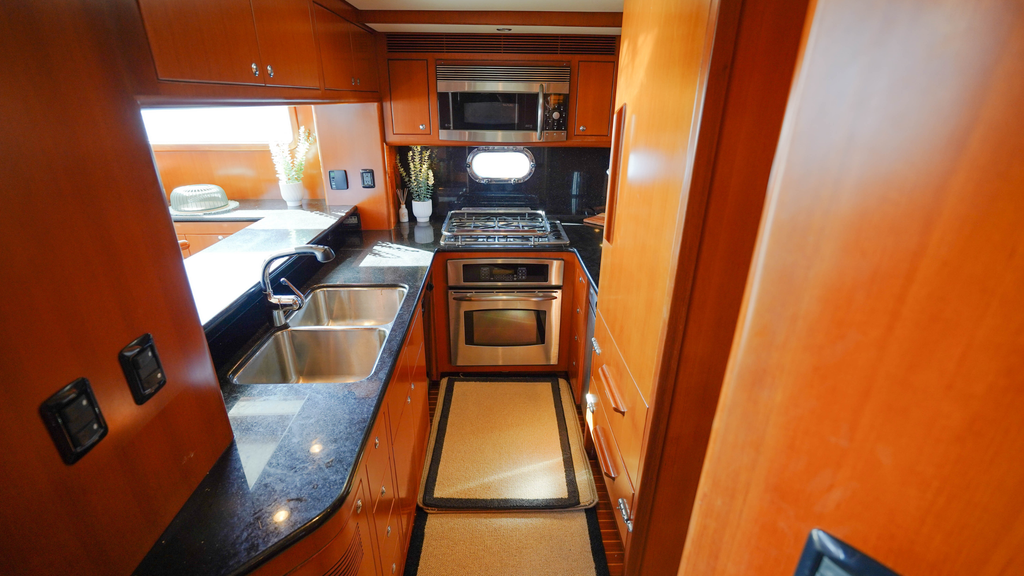
The design combines a substantial saloon, practical galley, comfortable accommodation and dedicated areas for navigation and machinery.
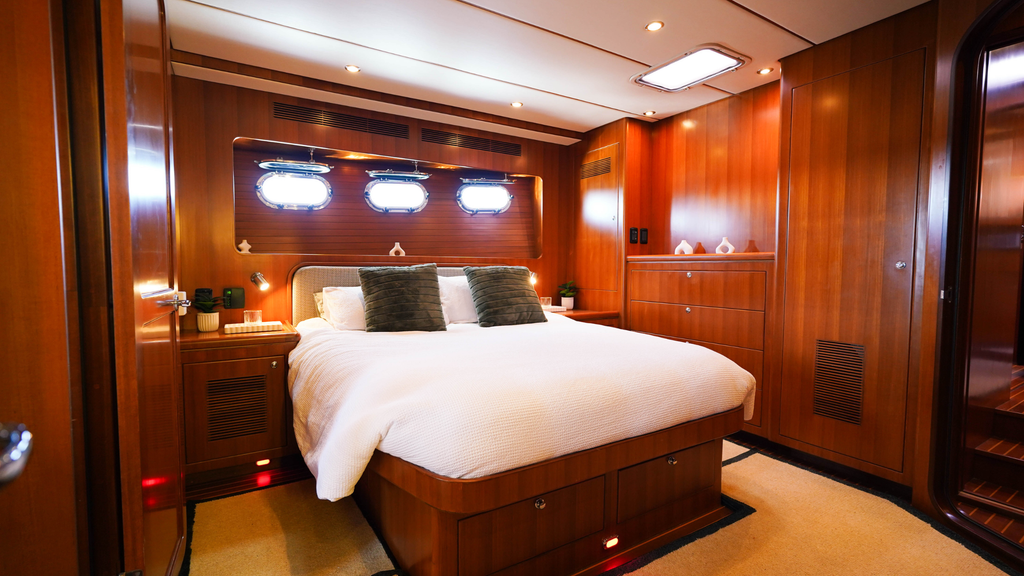
Last Mango offers three cabins, including a generous owner’s suite with its own bathtub.
The galley features full-size appliances and Sub-Zero refrigeration, while a Bosch washing machine and dryer make longer stays aboard considerably more practical.
But comfortable liveaboard cruising involves more than just accommodation.
Water, Electricity and Independence
When cruising away from marinas, access to fresh water and electricity becomes particularly important.
Last Mango carries 1,500 litres of fresh water and is equipped with a Village Marine watermaker, allowing fresh water to be produced from seawater when operating conditions permit.
A 20kW Northern Lights generator provides onboard electrical power, supporting the various domestic and operational systems.
Together with air conditioning, refrigeration and laundry facilities, these features help make extended periods away from shore-based facilities more manageable.
Of course, all these systems require maintenance, and understanding their condition and operating requirements is an important part of purchasing any long-range cruising yacht.
What Should You Look for When Buying a Pre-Owned Nordhavn?
Nordhavns have a strong reputation among long-distance cruisers, but like any substantial cruising vessel, the condition of an individual boat matters enormously.
A well-maintained yacht with documented servicing and properly functioning systems can offer a very different ownership experience from one with significant deferred maintenance.
When assessing a pre-owned Nordhavn 55, there are several areas worth investigating.
- Engine and propulsion: Review service records, engine hours, cooling systems, gearbox condition and the operation of the wing engine.
- Fuel systems: Check the condition of tanks, fuel transfer arrangements, filtration equipment and associated plumbing.
- Stabilisers and hydraulics: Confirm servicing history and the condition of hydraulic components, seals and associated equipment.
- Electrical systems: Assess batteries, charging systems, inverters, generators and shore-power arrangements.
- Navigation equipment: Consider the age, functionality and integration of navigation and communication electronics.
- Watermaking and domestic systems: Check the operation and maintenance history of watermakers, refrigeration, air conditioning and other onboard equipment.
A comprehensive marine survey, appropriate mechanical inspections and a sea trial are important steps when purchasing a vessel of this complexity.
At Sydney Marine Brokerage, we believe understanding a vessel’s systems and intended use is just as important as its accommodation and presentation.
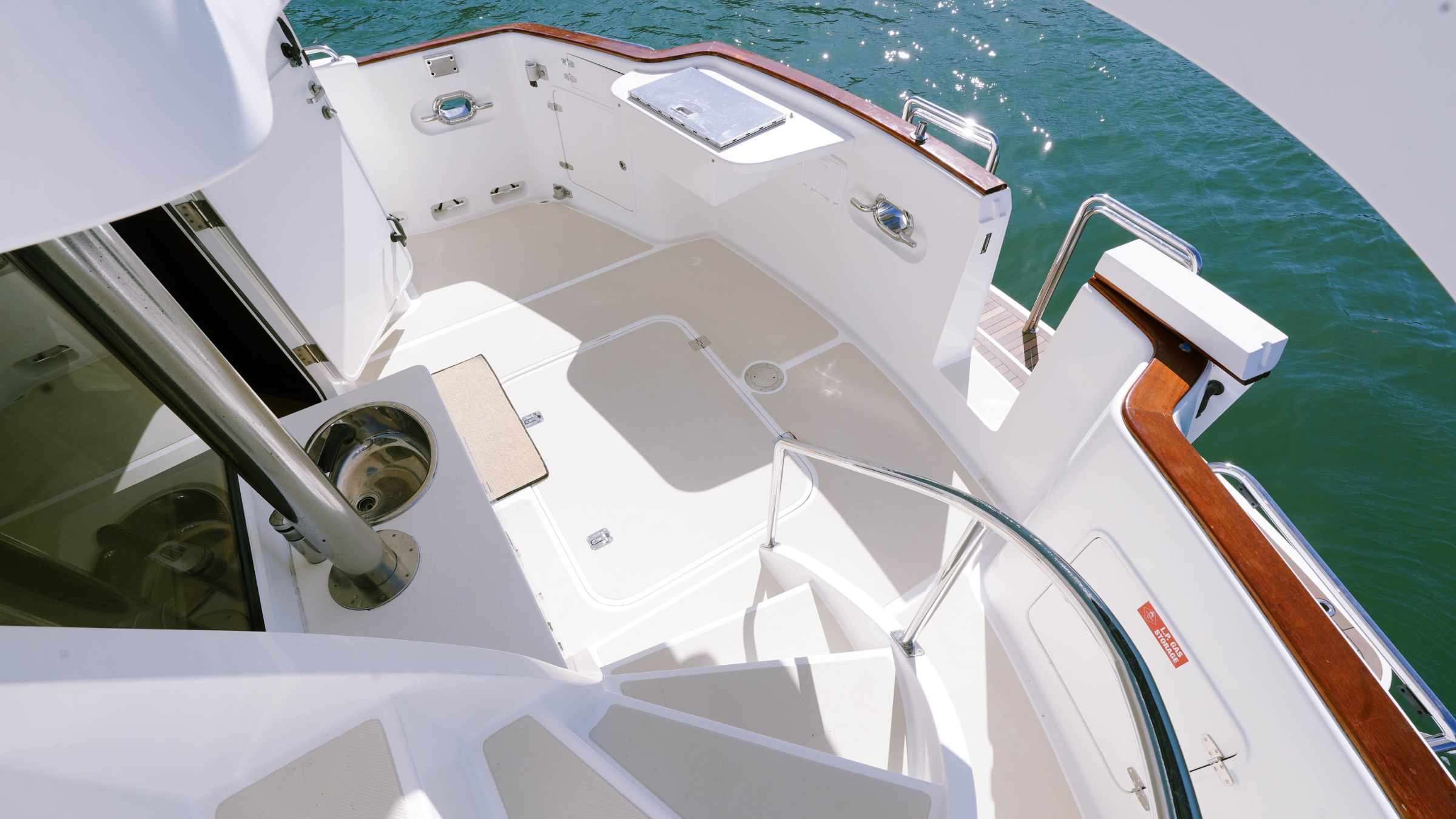
Why Is the Nordhavn 55 So Popular?
The Nordhavn 55 has an interesting place in the manufacturer’s history.
Introduced in the mid-2000s, the model combined serious offshore capability with the living space and comfort normally associated with larger motor yachts.
According to Nordhavn specialist brokerage JMYS, 45 Nordhavn 55 hulls were built, and the design subsequently provided the foundation for the Nordhavn 60 and Nordhavn 63.
The Nordhavn 55 is no longer in production, making the pre-owned market the way to acquire one.
Its combination of long-range capability, substantial construction, practical accommodation and recognisable styling continues to appeal to buyers interested in expedition-style cruising.
And while some owners may dream of crossing oceans, others simply appreciate the independence and comfort these vessels offer for extended coastal cruising.
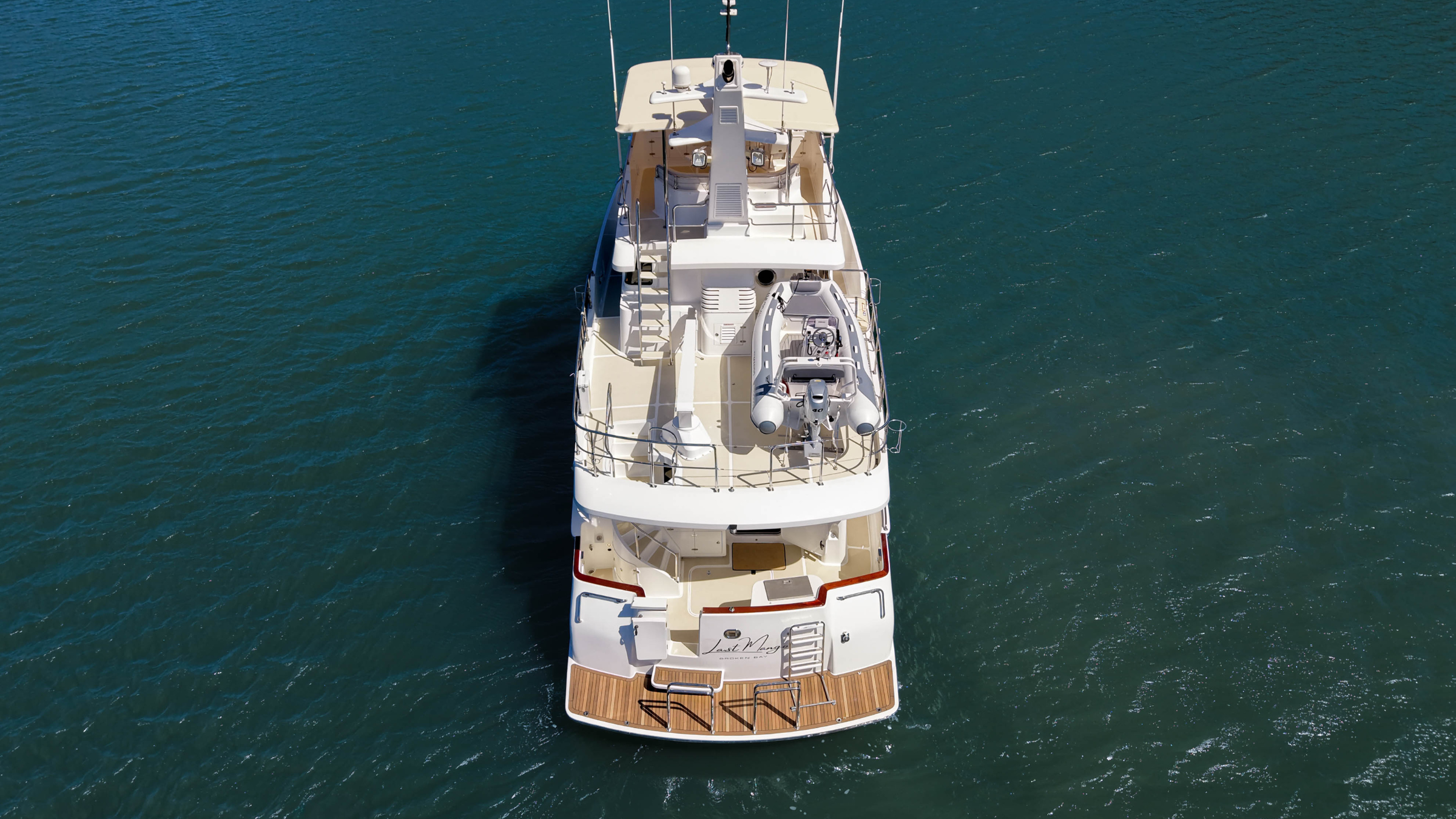
Is the Nordhavn 55 a Good Boat for Australian Coastal Cruising?
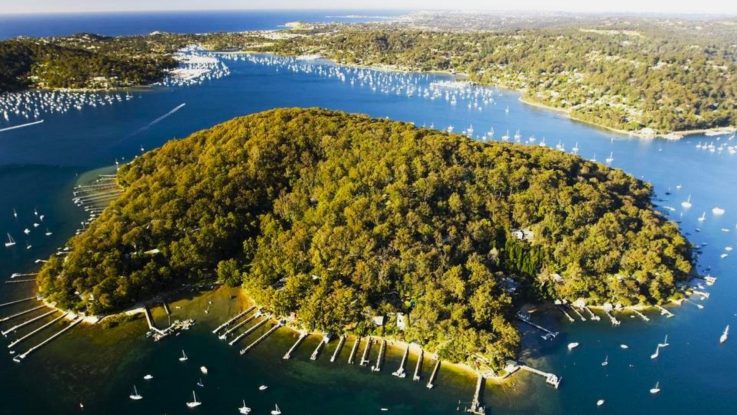
Australia offers enormous opportunities for long-distance cruising, from the sheltered waterways of Pittwater to the Queensland coast, the Great Barrier Reef and more remote destinations.
For owners considering extended voyages, a vessel such as the Nordhavn 55 offers several appealing characteristics.
Its displacement hull is designed for economical passage-making, while the onboard watermaking, power generation and accommodation systems support extended time aboard.
However, suitability for a particular voyage depends on the condition and preparation of the individual vessel, the crew’s experience, weather conditions and careful passage planning.
After spending time aboard Last Mango, Sydney Marine Brokerage Dealer Principal Andrew Withers believes she’s well worth considering for anyone looking for a capable long-range cruising yacht.
In our video walkthrough, Andrew highlights the comfort, safety and impressive fuel capacity that make Last Mango so appealing for extended family cruising, whether that’s exploring Australia’s coastline, travelling around Tasmania or heading further afield. And after spending time aboard, it’s fair to say he’d love to have a Nordhavn 55 of his own.
Watch Andrew’s full walkthrough below as he takes us through Last Mango and explains what makes this Nordhavn 55 such an interesting vessel.
Take a Closer Look at ‘Last Mango’
Our 2006 Nordhavn 55 Last Mango is currently located in Newport, Pittwater, and available for inspection through Sydney Marine Brokerage.
With her John Deere main engine, Lugger wing engine, active fin stabilisers, extensive navigation equipment and comfortable accommodation, she represents an interesting opportunity for buyers considering a serious long-range cruising yacht.
Whether you’re planning extended coastal cruising around Australia or have bigger adventures in mind, Last Mango is certainly worth a closer look.
View the Nordhavn 55 ‘Last Mango’ listing
For further information or to arrange a private viewing, contact the team at Sydney Marine Brokerage.